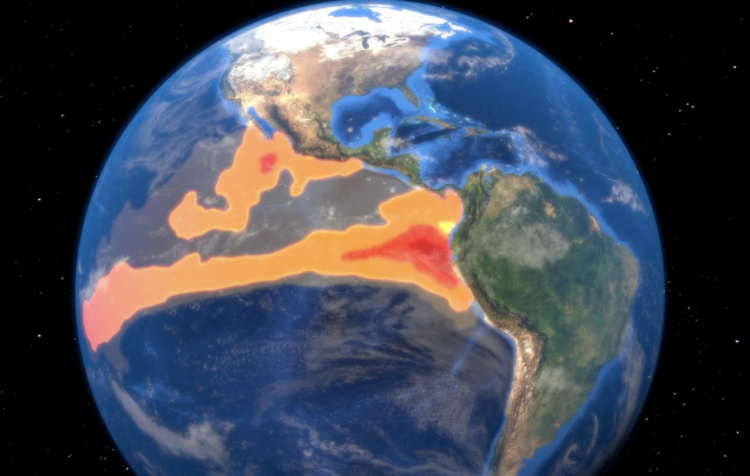
An unprecedented significant El Niño
The El Niño phenomenon occurs in the tropical Pacific Ocean roughly every five years. It generally brings wetter and warmer weather conditions to the Americas.
“We are facing a very significant El Niño event, the scale of which could be unprecedented,” stated Mr. Buontempo*, noting that it could lead to a new record for the global average temperature by the end of the year or early 2027.

In July, global oceans reached record temperatures for the second consecutive month. The average global sea-surface temperature hit 20.96°C, surpassing the previous record set in 2023.
Ocean heat has reached exceptionally high levels across much of the tropical Pacific—an area where current conditions associated with the natural El Niño climate cycle (which tends to warm waters and global temperatures while fueling extreme events like droughts and floods) are expected to intensify further in the coming months.
“However, the primary driver of this warming—as we know—lies in the greenhouse gases humanity emits into the atmosphere,” he adds.
Already, waters around Europe—specifically in the western Mediterranean and along the Atlantic coast—are experiencing unusually high temperatures this July, accompanied by marine heatwaves.
El Niño events typically peak at the end of the year, when heat accumulated in the ocean is released into the atmosphere, driving up global temperatures.
The previous El Niño event contributed to making 2023 and 2024 the second and first hottest years on record, respectively.
*Carlo Buontempo, Director of the Copernicus Climate Change Service (C3S)
What do you think?