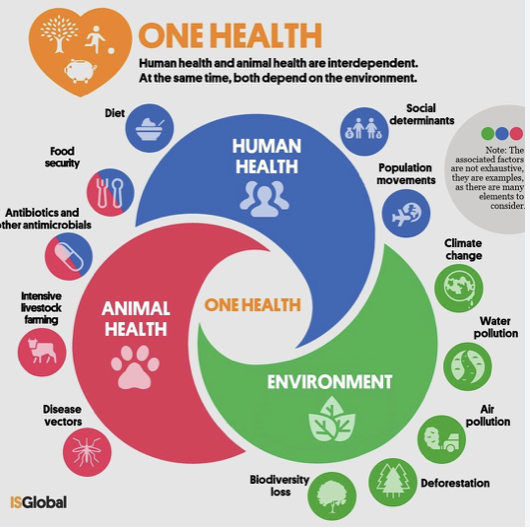
The powerful concept of ONE HEALTH
One Health is an approach that recognizes that the health of people is closely connected to the health of animals and our shared environment.
One Health is not new, but it has become more important in recent years.
This is because many factors have changed interactions between people, animals, plants, and our environment.
- Human populations are growing and expanding into new geographic areas. As a result, more people live in close contact with wild and domestic animals, both livestock and pets. Animals play an important role in our lives, whether for food, fiber, livelihoods, travel, sport, education, or companionship. Close contact with animals and their environments provides more opportunities for diseases to pass between animals and people.
- The earth has experienced changes in climate and land use, such as deforestation and intensive farming practices. Disruptions in environmental conditions and habitats can provide new opportunities for diseases to pass to animals.
- The movement of people, animals, and animal products has increased from international travel and trade. As a result, diseases can spread quickly across borders and around the globe.
These changes have led to the spread of existing or known (endemic) and new or emerging zoonotic diseases, which are diseases that can spread between animals and people. Every year, millions of people and animals around the world are affected by zoonotic diseases. Examples of zoonotic diseases include:
Major Focus Areas
- Zoonotic Diseases: Controlling infections that spread between animals and humans, such as avian influenza, Ebola, and COVID-19.
- Antimicrobial Resistance: Tackling germs that resist drugs across soil, water, food supplies, and medical facilities.
- Environmental Health: Managing climate change, pollution, and deforestation that disrupt natural habitats and drive disease.
- Food Safety: Ensuring safe agricultural practices and secure food chains for communities
Key Principles
- Interconnectedness: Human, animal, and ecological health rely on each other; harm to one affects the others.
- Multidisciplinary Teamwork: Experts in human medicine, veterinary care, environmental science, and agriculture work together.
- Shared Prevention: Focuses on stopping health threats at the animal-human-environment interface rather than reacting after outbreaks occur
What do you think?