Toxicity of sargassum seaweed
By admin3485, 16 November 2025
Exposure related to  strandings and their effects on human health;
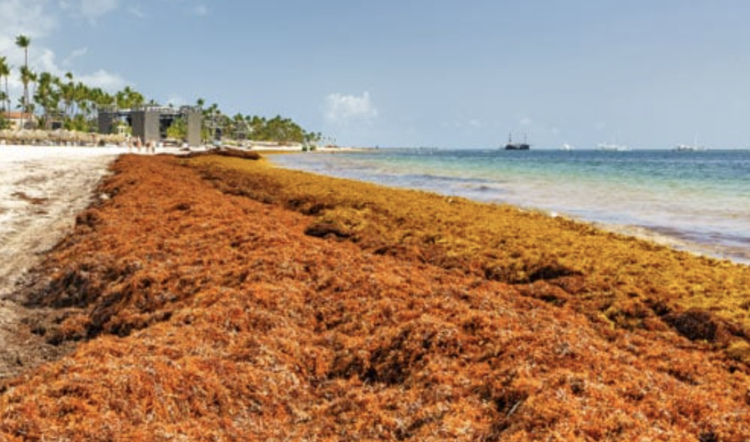
The western Atlantic coast is experiencing successive waves of Sargassum seaweed strandings on its shores.
Despite the cleanup efforts implemented, this seaweed decomposes on site. Its decomposition leads to the production of hydrogen sulfide (H2S), which can be detected at high concentrations.
Reports from physicians regarding the health effects experienced by the population exposed to H2S, as well as public complaints about the odor problem, have increased significantly.
Hydrogen sulfide toxicity Individuals are primarily exposed to H2S through inhalation. Ingestion and skin contact are possible, but contribute only slightly to overall exposure.
While the effects in humans of acute exposure—over a short period—are well known (neurological and respiratory effects of increasing severity with exposure concentration), the effects of longer-term H2S exposure are less documented.
The first observed effects are irritative symptoms of the upper respiratory tract and eyes. Neurobehavioral effects and neurological symptoms (headaches, loss of balance and memory) are suspected. Furthermore, given the current state of knowledge and the limited number of available studies, no conclusions can be drawn regarding the potential carcinogenicity of H2S. The strong odor associated with this gas should also be noted.
What do you think?